400 Triterpenes: The Biochemistry of Calm
Reishi's most remarkable property isn't immune support: it's cortisol. Over 400 distinct triterpene compounds interact with the HPA axis in ways no other natural source can replicate. This is what 2,000 years of empirical use looks like under a microscope.
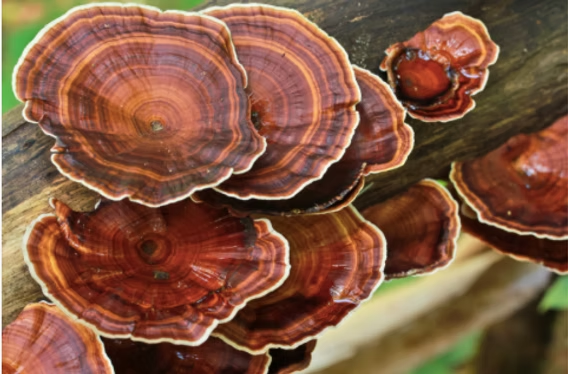
The ancient Chinese called it Lingzhi: "spiritual potency." Emperors hoarded it. Taoist monks used it in meditation practice. Japanese monasteries cultivated it for longevity. Two thousand years of convergent cultural evidence pointed at a single mushroom: Ganoderma lucidum. Reishi.
What the biochemistry reveals is that the empirical tradition was, essentially, correct, just for reasons nobody understood until the last forty years.
The HPA axis and chronic stress
The hypothalamic-pituitary-adrenal (HPA) axis is the central stress response system of the human body. Under perceived threat, it releases cortisol, the primary stress hormone. In short bursts, cortisol is useful. Chronically elevated, it causes inflammation, immune suppression, sleep disruption, cognitive decline, and accelerated cellular aging.
Modern life produces chronic HPA activation. The research on Reishi is about whether a natural compound can modulate this system without suppressing it entirely, and without the side effects of pharmaceutical intervention.
Ganoderic acids: 400+ distinct compounds
Reishi contains the highest known diversity of triterpene compounds in any natural source. Over 400 distinct ganoderic acids have been identified. These fat-soluble compounds interact with multiple biological pathways simultaneously: this is what makes Reishi genuinely adaptogenic, as opposed to simply sedating.
Studies have shown that ganoderic acids inhibit the release of histamine (the anti-allergy effect), reduce proinflammatory cytokine production (the anti-inflammatory effect), and modulate adrenal cortisol output, not by suppressing the adrenal glands but by regulating feedback signals in the HPA axis.
The clinical evidence:
A 2012 randomized controlled trial published in Evidence-Based Complementary and Alternative Medicine showed that Reishi extract significantly reduced fatigue and improved quality of life in breast cancer patients undergoing chemotherapy, a population under extreme physiological and psychological stress.
Multiple studies have shown reductions in anxiety scores and improvements in sleep quality. The proposed mechanism is modulation of GABAergic signaling, the same pathway targeted by benzodiazepines, but without the dependency or cognitive impairment.
Why the fruiting body matters for triterpenes:
Triterpenes are fat-soluble and concentrated in the fruiting body and spores, not the mycelium. Products made from mycelium grain contain negligible ganoderic acid content. An alcohol extraction step is essential to liberate and preserve these compounds.
This is why Reishi is the product that most clearly illustrates the difference between a real mushroom supplement and a category imposter.